
Guide
Are Thai Cosmetics Good? Category-by-Category Review
Thai cosmetics quality depends on manufacturing standards, price positioning, and market fit. This guide evaluates each product category separately and shows how to verify authenti

When a seller asks if Thai cosmetics are good, they're usually asking one of three different things, and there's no single answer for all three: quality of manufacturing, value for money, or fit for their target market. For importers and distributors, only the third question determines whether to source or not. This article separates these three questions, evaluates Thai skincare and other produktong Thai by category, and shows how to verify before placing your first order.
Separate the question: good at what, good for whom
When a seller asks if Thai cosmetics are good, they're often asking one of three things, each with its own way to verify.
First, good in manufacturing. This is a question about the factory, formulation, testing, and batch consistency. It can't be answered at the country level—only at the level of each manufacturer and product line.
Second, good for the price. This is a question about price positioning. A product might be excellent in the mass market segment but fall short in the premium segment, and vice versa.
Third, good for your market. This is the deciding question. It covers: do your customers recognize the brand, does the formula work for the climate and skin types in your market, can you get the import paperwork done, and can you resell at a profitable price?
For importers and distributors, the order matters more than you'd think: start with the third question, then circle back to the first once you've identified the right product categories. Many slow-moving inventory problems aren't because the produktong Thai is poor—they happen because the product is good but doesn't match the seller's customer profile and pricing strategy.
One note on how to read information: reviews on forums and videos usually come from end consumers, reflecting personal experience with one product type. That data is useful for knowing what people care about, but it doesn't replace your own sampling and source verification.
Thai manufacturing base: where the real strength lies
Thailand is one of the major cosmetics manufacturing bases in Southeast Asia, and this creates three notable features for buyers.
The first is breadth of product range. In the same market, you can find mass-market domestic brands, more premium domestic brands, and international labels manufactured in Thailand like NIVEA, Vaseline, Pond's, Lux, Sunsilk, Protex, and Colgate. For distributors, this means you can build a multi-tier product range from a single sourcing country.
The second is formulations developed for tropical climates. Most Thai skincare and sun care products sold locally are designed for high temperatures, high humidity, and extended outdoor time. This is a real advantage when selling in Vietnam, the Philippines, or the Middle East, because the product feel matches customer expectations better than formulas designed for temperate climates.
The third is strength in herbal and traditional products. This is where Thailand has its own foundation, and it's also easier to tell an origin story when reselling Thai herbal products.
One thing needs to be clear: these are characteristics of the sourcing market, not a guarantee for every product. Quality is still determined at the manufacturer level. The fact that a product is made in Thailand doesn't automatically say anything about the standards of that specific factory, and certifications should be reviewed per product, not inferred from country of origin.
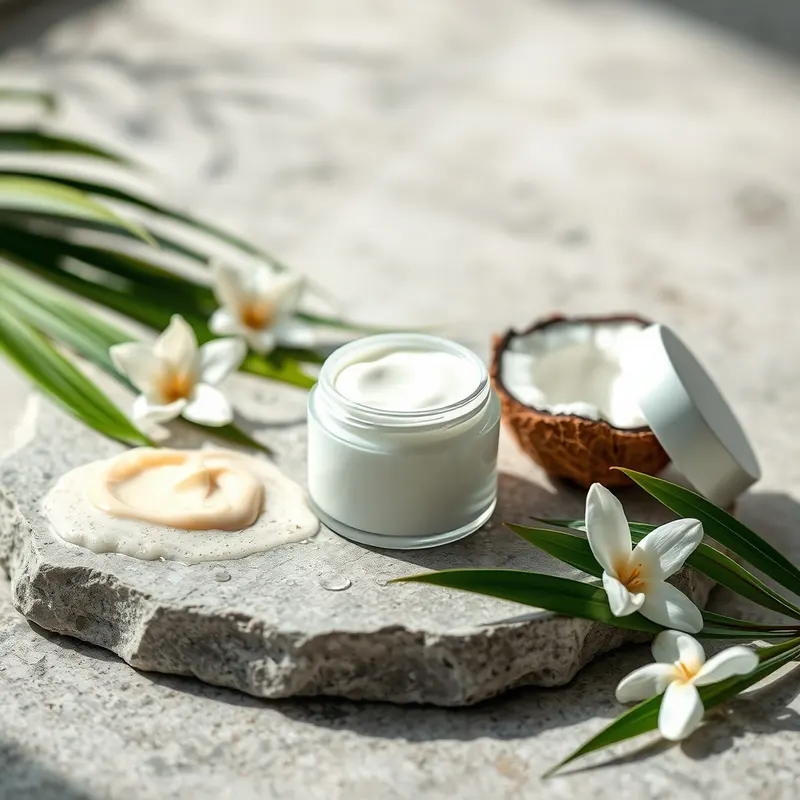
Evaluate by product category
Instead of a blanket answer, look at each category separately—the fit varies widely.
• Basic skincare. The broadest and most competitive category, including facial cleansers, toners, serums, and creams. Well-known domestic brands popular with Southeast Asian buyers like Mistine, Srichand, Beauty Buffet, and Baby Bright operate in the mass market. Strengths include accessible pricing and lightweight textures; the challenge is the huge number of similar products on the market, so you need a clear reason for customers to choose your line.
• Sun care. This is a category where Thai skincare is widely sought by regional buyers because formulas are designed for intense sun and typically focus on non-sticky feel. Note that labeling and disclosure regulations for sun care products differ by country, so check with your local regulatory body before adding these to your range.
• Color cosmetics. Options range from youth-positioned brands to highly colorful lines like Cathy Doll, Sivanna Colors, and ODBO. This category sells well with trends but product life cycles are short, so inventory risk is real.
• Body care and cleansing. Quick repeat purchase cycles, stable order values, and good fit for wholesale channels to retail shops. The downside is weight and volume—shipping costs significantly affect your landed cost.
• Thai herbal products and massage products. Herbal oils, topical remedies, warming oils, plus products like Thai essential oils and Thai massage oil. These have good value per unit weight, long shelf life, and clear product stories, making them usually the easiest category to start with for new importers.
• Oral care and other personal care. Consistent demand, price-driven competition, useful for building order size rather than generating primary margins.
Points to consider before importing
To evaluate fairly, mention the factors that make importing harder—not to dismiss the categories, but so you can plan ahead.
• Climate-specific formulations are an advantage but also a limit. Products designed for hot and humid conditions might not be welcomed in dry or cold markets, where customers expect richer textures.
• Brand recognition isn't consistent across markets. A brand very familiar in Vietnam might be completely unknown in the Middle East, meaning you have to build demand yourself, and that cost must be factored into your pricing.
• Packaging and shipping. Bottles, tubes, and liquid products need careful packing for long distances; damage rates should be calculated as a fixed cost line item, not a contingency.
• Remaining shelf life when goods reach your customer. For skincare and active-ingredient products, the number that matters is shelf life remaining at delivery to your customer, not at warehouse departure.
• Import paperwork. Cosmetics imported into Vietnam must be registered before sale, and Vietnamese-language secondary labels are mandatory. Each country's regulations change over time, so verify with your local regulatory body or customs broker.
• Source tracking. When buying through channels where you can't verify the supply chain, you'll struggle to prove origin if audited and struggle to handle complaints about the product. This is why many distributors work with manufacturers or official distributors, where documentation and paperwork are provided per product line when ordering.
None of these is a deal-breaker. They're just lines in a spreadsheet that experienced importers fill in before placing an order.
How to verify before ordering your first batch
Instead of looking for a universal quality answer, run a quick verification process for the specific products you plan to import.
• Narrow your selection. Pick three to five SKUs in one category, not ten SKUs spread across five categories. Data from a narrow range is much easier to read.
• Sample the exact format you'll resell. The sample must be the exact volume, exact packaging, exact label version you'll import—not a trial sample.
• Test with documentation. Have at least three people from your actual customer segment use it for two weeks and record first impressions, impressions after one hour, and any reactions.
• Check packaging. Open caps, test pumps, leave the product at high temperature for a few days, and watch for leaks or texture changes. This step catches shipping problems before you lose an entire batch.
• Verify your partner. Confirm the legal entity name, address, and that the bank account name matches the legal entity signing your contract. Ask clearly whether they're the manufacturer, official distributor, or trading company.
• Preview documentation. Ask to see a sample of the complete document package you'll receive per product when ordering, so you know whether your country's registration process is doable.
• Place a trial order. Small enough that mistakes don't cause major damage, large enough to reflect how your partner handles real orders.
• Track repeat purchase rates, not just first sales. First sales come from curiosity; repeat purchases show whether the product actually fits.
Once you've gone through this process, you won't need a universal answer anymore, because you'll have the answer for exactly the produktong Thai you're selling.
Stock existing brands or build your own line
Once you've identified the right product categories, you have two paths—and they serve two different goals.
Importing established brand products is the shorter path. The produktong Thai already has packaging, some market recognition, and you enter fast. Your work focuses on category selection, pricing, distribution channels, and import paperwork. The downside is you compete directly on price with others selling the same product, so margins get squeezed over time, and you can't control who else your supplier sells to.
Building your own brand through OEM skincare manufacturing is the longer path but fundamentally different. You choose the formula, packaging, and positioning, so you avoid direct price comparison. In exchange, you take on more work: product development, sample approval, design, paperwork and testing for your target market, and a budget to build demand from scratch. Most established distributors use OEM skincare as a way to add a few exclusive SKUs alongside their standard product line, not to replace their entire range.
A practical approach: use existing brands to learn your market and generate cash flow, then use OEM skincare for products you've proven people actually want to repurchase. This order carries much less risk than building private label before you know what your customers really buy. The cost and timeline for both paths depend on the product and quantities—your sourcing consultant will discuss specifics when quoting.
Kailangan ng tulong mula sa eksperto?
Iwan ang iyong detalye at makikipag-ugnayan ang aming team.
FAQ
Mga madalas itanong
Produktong Thai phù hợp với phân khúc nào ở thị trường Việt Nam?
Most domestic Thai brands operate in the mass and mid-market segments, making them suitable for retail shops, retail chains, and online sellers targeting price-conscious customers who still want recognized brands. In higher segments, the advantage usually lies in herbal and products with clear origin stories, rather than basic skincare where similar options are abundant.
Nhóm hàng nào dễ bắt đầu nhất với người mới nhập Thai cosmetics?
Usually categories with good value per unit weight, long shelf life, and low trend dependence—like Thai herbal products, oils, and massage products. The reason: shipping costs take a smaller share of landed cost, pressure to sell quickly is lower, and products are easy to explain to customers. Color cosmetics are the opposite, requiring tight trend alignment and risking inventory buildup.
Làm sao biết sản phẩm là hàng chính hãng khi nhập Thai skincare?
The most reliable way is to control the supply chain: confirm you're buying from the manufacturer or official distributor, verify that the legal entity name and receiving bank account name match, and ask to see the complete document set provided for each product when ordering. At the same time, inspect actual samples for packaging quality, batch codes, and expiration dates before placing a large order.
Nhập hàng có sẵn hay làm OEM skincare thì có lợi hơn?
They serve different goals. Ready-made products get you to market fast and generate cash, but you compete directly on price with others selling the same Thai cosmetics. Private label gives you pricing control with no direct comparison, but requires more development time, paperwork, and budget to build demand. Many distributors do both, using private label only for products that have proven repeat demand.
Inihanda ng ThaiNex team para sa impormasyon lamang. Ang ilang link ay maaaring tumungo sa mga inirerekomendang partner.
Mga artikulo
Kaugnay na artikulo

Thai Skincare Wholesale Dubai: A Buyer's Guide for Importers and Retailers
Dubai's beauty retail and e-commerce scene has a growing appetite for Thai beauty products, and for good reason: Thailand's cosmetics industry combines mature manufacturing capabil
Thai Sunscreen Wholesale: A Buying Guide for PH Sellers
Buying Thai sunscreen wholesale for the Philippine market is one of the more forgiving places to start, provided you understand

Nhập thực phẩm chức năng Thái Lan: Cẩm nang cho nhà nhập khẩu và người bán sỉ
Thực phẩm chức năng và viên uống bổ sung Thái đang được nhiều nhà nhập khẩu, chủ shop online và chuỗi bán lẻ tại Việt Nam quan tâm nhờ danh mục đa dạng, thương hiệu quen thuộc với